



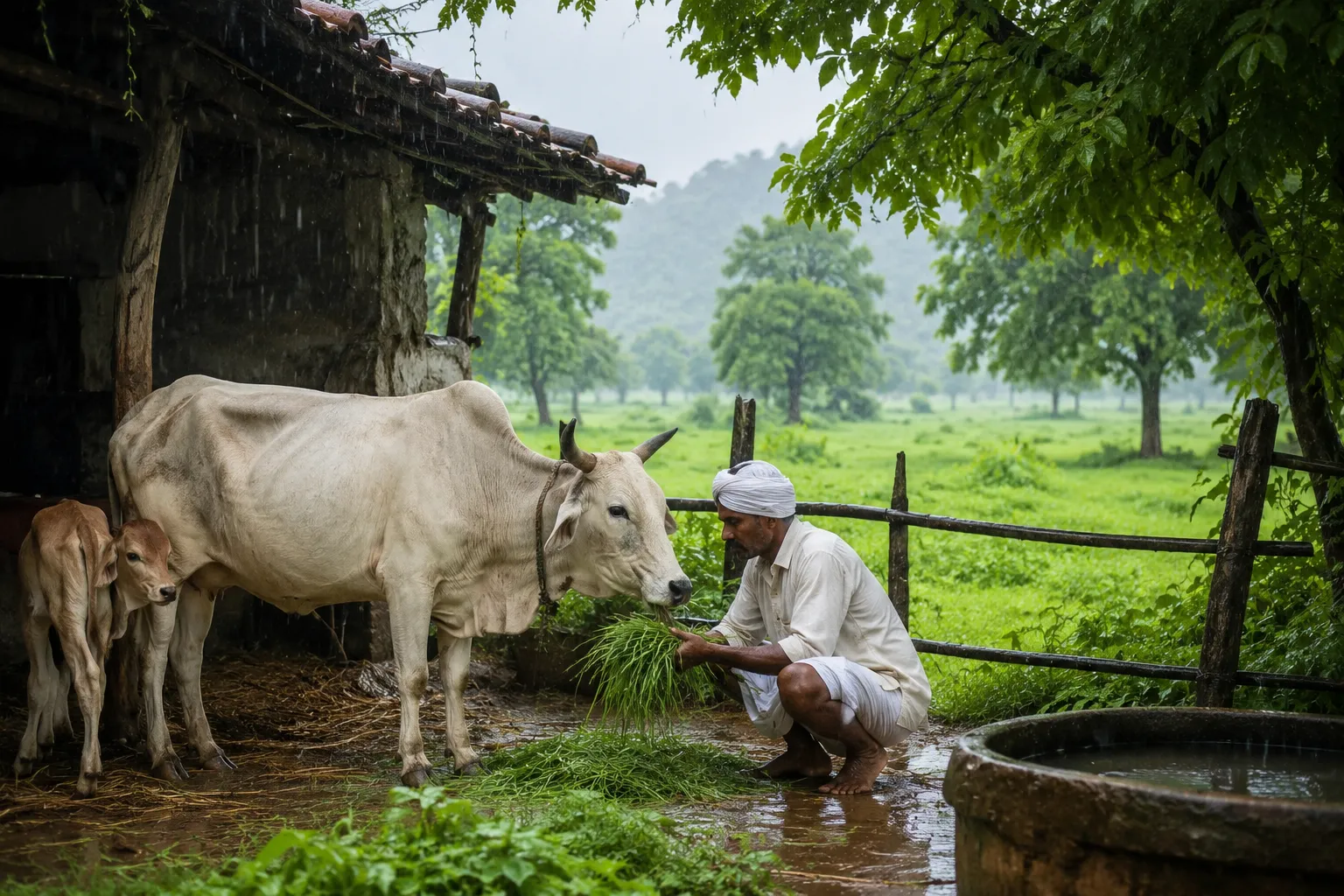
The rainy season brings lush green fields and an abundance of fresh fodder, making it an important time for cattle farming. However, monsoon weather also creates conditions that can affect your cow’s health. Excess moisture, muddy surroundings, insects, and sudden changes in temperature can increase the risk of infections and digestive problems.
By following a few simple natural practices, you can help your cow remain healthy, active, and productive throughout the rainy months.
Maintain a Dry and Comfortable Shelter
One of the biggest challenges during the monsoon is keeping the cattle shed dry. Wet floors encourage harmful bacteria and fungi, which may lead to hoof problems and skin infections.
Clean the shed every day, remove manure regularly, and replace damp bedding with fresh, dry material. Proper ventilation also helps reduce humidity and keeps the environment comfortable for your animals.
Feed Fresh and Nutritious Fodder
Rain encourages rapid grass growth, but not all green fodder is safe. Avoid feeding grass that has become moldy, fermented, or spoiled after heavy rainfall.
A healthy diet should include:
- Fresh green fodder
- Dry hay or straw
- Mineral supplements
- Clean drinking water
Balanced nutrition helps maintain strong immunity and supports healthy growth.
Ensure Access to Safe Drinking Water
During the rainy season, water sources can easily become contaminated with mud, bacteria, or parasites. Always provide fresh, clean water and wash drinking containers regularly.
Proper hydration improves digestion, supports milk production, and helps regulate body temperature.
Improve Digestion Naturally
Digestive disorders are common during the monsoon because cows often consume wet fodder. Supporting digestive health naturally can improve nutrient absorption and reduce stomach discomfort.
Herbal digestive supplements, combined with a balanced diet, may help maintain normal gut function, improve appetite, and support healthy digestion.
Protect Your Cow from Parasites
Ticks, flies, mosquitoes, and internal worms become more active during humid weather. These parasites not only cause discomfort but can also spread diseases.
Reduce the risk by:
- Keeping the shed clean
- Removing standing water
- Grooming your cow regularly
- Following a proper deworming schedule recommended by your veterinarian
A clean environment is one of the most effective ways to prevent parasite infestations.
Strengthen Natural Immunity
A healthy immune system allows cows to better cope with seasonal changes. Good nutrition, adequate rest, and natural herbal supplements can provide valuable support during the rainy season.
Providing essential vitamins, minerals, and herbal ingredients may help maintain overall wellness and improve resistance against common seasonal illnesses.
Pay Attention to Hoof Care
Constant exposure to mud and moisture softens the hooves and increases the risk of foot infections.
Inspect your cow’s hooves regularly and clean away any mud after grazing. Keeping walking areas as dry as possible helps prevent hoof-related problems and improves mobility.
Minimize Stress
Environmental stress can reduce feed intake and affect overall performance. Give your cows enough space to move comfortably and maintain a consistent feeding routine.
A calm and comfortable animal is more likely to stay healthy and productive throughout the season.
Watch for Early Warning Signs
Regular observation allows you to identify health problems before they become serious.
Seek veterinary advice if your cow shows signs such as:
- Reduced appetite
- Fever
- Loose stools
- Persistent coughing
- Difficulty walking
- Low milk yield
- Unusual behavior or weakness
Early treatment often leads to faster recovery and prevents further complications.
Consider Herbal Health Support
Many farmers include herbal supplements as part of their daily cattle management routine. Natural formulations can help support digestion, immunity, appetite, and overall health when used alongside proper nutrition and hygiene.
Herbal products should always be used according to the manufacturer’s instructions and should complement—not replace—good management practices or veterinary care.
Conclusion
Keeping your cow healthy during the rainy season does not require complicated methods. A clean shelter, balanced feeding, fresh water, parasite control, and regular health monitoring can significantly reduce the risk of seasonal illnesses.
With consistent care and natural health support, your cows can remain active, comfortable, and productive throughout the monsoon, helping you maintain both animal welfare and farm performance.